


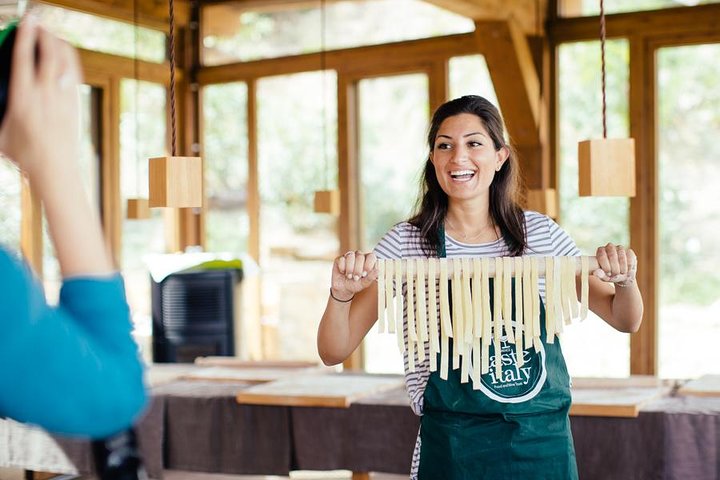


Florence Pasta Making Classes: Fresh Pasta by Hand
Quick summary: A Florence pasta making class is a focused, hands-on lesson in the art of fresh pasta — learning to make the dough, roll it, and shape it into tagliatelle, ravioli, tortelli and more, entirely by hand, with a local chef. Where a general cooking class covers a whole menu, a pasta class concentrates on this one beloved craft, so you master the technique properly and take home a real, repeatable skill. You then cook and eat your pasta, usually with wine. It is hugely popular, great fun, and works brilliantly for couples, families and groups.
Pasta Making Classes at a Glance
| Detail | Information |
|---|---|
| Focus | The craft of fresh pasta, in depth |
| You learn | Dough, rolling and shaping by hand |
| Pasta types | Tagliatelle, ravioli, tortelli and more |
| Then | Cook and eat your own pasta |
| Usually with | Wine, and sometimes a sauce lesson |
| Versus a cooking class | Focused on pasta, not a full menu |
| Best for | Couples, families, groups, pasta lovers |
| Skill level | All levels, beginners welcome |
| Take home | A real, repeatable skill |
What Is a Florence Pasta Making Class?
A Florence pasta making class is a hands-on lesson dedicated to fresh pasta, in which you learn to make it from scratch by hand with a local chef.
Where a general cooking class covers a whole menu, a pasta class concentrates on this one craft — the making of the dough, the rolling out, and the shaping into different forms of pasta. This focus means you go deeper: rather than making pasta as one element of a broader meal, you learn the technique properly, practising until you can do it yourself.
At the end, you cook and eat the pasta you’ve made, usually with a sauce and wine. It is one of the most popular and enjoyable food experiences in Florence — deeply satisfying, great fun, and a genuine skill to take home.
What Do You Learn in a Pasta Class?
A pasta class takes you through the whole process of making fresh pasta by hand.
The dough — mixing and kneading the simple dough of flour and eggs (or flour and water) that is the foundation of all fresh pasta, and learning how to get it right.
Rolling — rolling the dough out to the correct thinness, whether by hand with a rolling pin (the traditional Tuscan way) or with a pasta machine.
Shaping — cutting and shaping the pasta into different forms, which is the heart of the class.
Sauces — many classes also teach a fresh sauce or two to go with the pasta, from a simple tomato to a ragù or butter and sage.
The emphasis is on hands-on practice and traditional technique, so you leave genuinely able to make fresh pasta at home — the whole point of the focused format.
What Types of Pasta Do You Make?
Pasta classes teach a range of fresh pasta shapes, and the variety is part of the fun.
Tagliatelle and other ribbon pasta — the long, flat cut pastas, made by rolling and slicing the sheet, among the most satisfying and achievable to learn.
Ravioli and filled pasta — the stuffed pastas, where you make the filling, lay it out and seal the pasta around it, a highlight for many.
Tortelli and tortellini — the folded and shaped filled pastas, a step up in skill and very rewarding.
Regional shapes — some classes teach Tuscan specialities such as pici, the thick hand-rolled pasta of southern Tuscany.
Which shapes you make depends on the class, but the combination of a ribbon pasta and a filled pasta is common, giving you both the rolling-and-cutting and the filling-and-shaping techniques. Making pasta with your hands, and seeing it take shape, is genuinely delightful — one of the reasons these classes are so beloved.
How Is a Pasta Class Different From a Cooking Class?
The difference is focus, and the choice depends on what you want.
A general cooking class covers a full menu — pasta might be one course among several, alongside a main and a dessert, giving you a broad taste of Tuscan cooking.
A pasta making class concentrates entirely on pasta, going deeper into the one craft so you master the technique properly, with more time to practise the rolling and shaping.
Both are hands-on and both end in a meal, but the pasta class trades breadth for depth. If you want to learn to make fresh pasta really well — the skill many people most want to bring home from Italy — the focused pasta class is the better choice. If you want a broader introduction to Tuscan cooking, the general class suits better. Some visitors do both, on different days.
Who Are Pasta Classes Best For?
Pasta making classes suit a wide range of visitors especially well.
Couples — making pasta together, then eating it with wine, is a fun and romantic shared activity.
Families — children love making pasta with their hands, making it one of the most family-friendly food experiences.
Groups of friends — a sociable, interactive and hands-on activity everyone enjoys.
Pasta lovers — anyone who wants to master the craft and make fresh pasta at home.
Beginners — the focused format suits complete beginners, who leave with a real skill.
The tactile, hands-on nature of pasta making — the mixing, rolling and shaping — makes it particularly engaging and inclusive, appealing to all ages and skill levels, and one of the most joyful food activities in the city.
Practical Tips for Florence Pasta Classes
- Choose a pasta class for depth — the focused way to master the craft.
- Expect to make a ribbon and a filled pasta, for both techniques.
- Great for families — children love the hands-on shaping.
- Check if sauces are taught too, as many classes include them.
- Come hungry — you eat the pasta you make, usually with wine.
- Consider a general cooking class instead if you want a full menu.
- Book ahead, as these popular classes fill quickly.
Are Florence Pasta Making Classes Worth It?
For anyone who loves pasta — and who doesn’t — a Florence pasta making class is one of the most enjoyable and rewarding food experiences in the city, and a skill worth bringing home.
The focused format is its strength. By concentrating entirely on fresh pasta, the class gives you the time and practice to actually master the craft — the dough, the rolling, the shaping of tagliatelle and ravioli and more — so you leave genuinely able to make it yourself. Making pasta by hand is deeply satisfying and great fun, and eating what you’ve made, with a sauce and wine, is the perfect reward.
It is also wonderfully inclusive: hands-on, tactile and welcoming to all ages and skill levels, it works beautifully for couples, families and groups alike, with children especially delighting in the shaping. Few activities are as sociable or as joyful.
If you want a broad introduction to Tuscan cooking, a general cooking class suits better; but if you want to learn to make fresh pasta properly — the one Italian skill many people most want to take home — the focused pasta class is well worth it, and a highlight of any food-lover’s trip to Florence.
Frequently Asked Questions
A Florence pasta making class is a hands-on lesson dedicated to fresh pasta, in which you learn to make it from scratch by hand with a local chef — the dough, the rolling, and the shaping into different forms. Where a general cooking class covers a whole menu, a pasta class concentrates on this one craft so you master the technique properly, then cook and eat the pasta you’ve made, usually with wine.
You learn the whole process of fresh pasta by hand: mixing and kneading the dough of flour and eggs; rolling it out to the right thinness, by hand or with a machine; and cutting and shaping it into different forms, which is the heart of the class. Many classes also teach a fresh sauce or two to go with the pasta, from a simple tomato to a ragù.
Classes teach a range of fresh shapes: ribbon pastas like tagliatelle, made by rolling and slicing the sheet; filled pastas like ravioli, where you make the filling and seal the pasta around it; folded shapes like tortelli and tortellini; and sometimes regional specialities such as Tuscan pici. A common combination is a ribbon pasta and a filled pasta, giving you both techniques.
A general cooking class covers a full menu, with pasta as one course among several alongside a main and a dessert, giving a broad taste of Tuscan cooking. A pasta making class concentrates entirely on pasta, going deeper into the one craft with more time to practise the rolling and shaping. The pasta class trades breadth for depth — the better choice if you want to master fresh pasta specifically.
Yes, they are one of the most family-friendly food experiences in Florence. Children love making pasta with their hands — the mixing, rolling and shaping — and the tactile, interactive nature of the activity engages all ages. The focused format also suits complete beginners, who leave with a real, repeatable skill, making it ideal for families, couples and groups alike.
Yes. At the end of the class you cook and eat the fresh pasta you’ve made, usually with a sauce and wine — the reward for your work. So it is worth coming hungry. Making pasta by hand and then enjoying it is deeply satisfying, and a genuine skill you take home to make it again.