






Siena Day Trips from Florence: The Great Gothic Rival
Quick summary: A Siena day trip from Florence takes you to one of Italy’s most beautiful medieval cities — Florence’s great historic rival, and a perfectly preserved Gothic gem. Its heart is the Piazza del Campo, the famous shell-shaped square where the Palio horse race is run, ringed by medieval palaces and overlooked by the soaring Torre del Mangia. Siena’s black-and-white striped Duomo is among Italy’s finest cathedrals, and the whole city, divided into ancient contrade (districts), is a step back into the Middle Ages. It makes a rich, full-day trip, often combined with San Gimignano.
Siena Day Trips at a Glance
| Detail | Information |
|---|---|
| The city | Siena, a great Gothic medieval city |
| Its heart | The Piazza del Campo (the shell-shaped square) |
| The famous event | The Palio horse race |
| The cathedral | The black-and-white striped Duomo |
| The tower | The soaring Torre del Mangia |
| The districts | The ancient contrade |
| Distance from Florence | Around 1–1.5 hours |
| Time needed | A full day rewards |
| Often combined with | San Gimignano (and Chianti) |
What Is a Siena Day Trip from Florence?
A Siena day trip is an excursion from Florence to the medieval city of Siena — Florence’s historic rival and one of the most beautiful and best-preserved medieval cities in Italy.
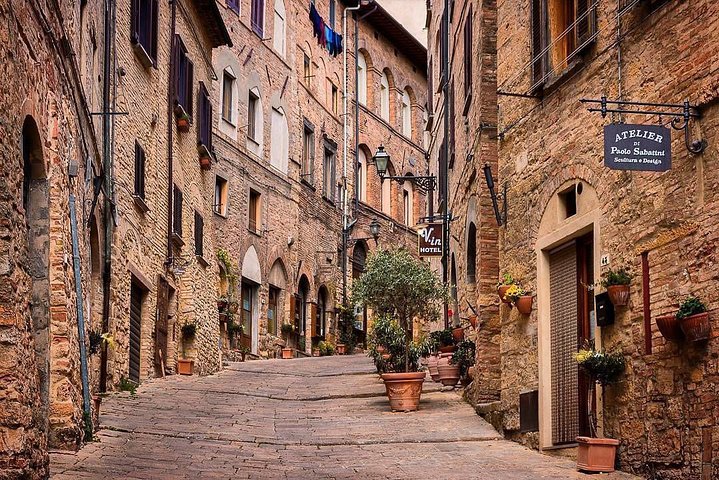
Where Florence is the city of the Renaissance, Siena is the great Gothic city, its golden age frozen in the Middle Ages. Wandering its steep, narrow streets of warm brick, you come to its glorious Piazza del Campo, its magnificent striped cathedral, and a townscape that has changed remarkably little in centuries. The whole city is a UNESCO World Heritage Site, and its enduring rivalry with Florence gives visiting it a special resonance.
Siena is around an hour to an hour and a half from Florence, and unlike compact Pisa, it rewards a full day of wandering — making it one of the richest and most rewarding day trips from the city, often combined with a nearby stop.
What Is the Piazza del Campo and the Palio?
The heart of Siena is the Piazza del Campo — one of the greatest medieval squares in Europe, and the stage for the famous Palio.
The Campo is a magnificent, sloping, shell-shaped square of warm brick, fanning out in nine segments below the towering town hall (Palazzo Pubblico) and its soaring bell tower, the Torre del Mangia. Ringed by medieval palaces, it is one of the most beautiful public spaces in Italy, and the social heart of the city — a place to sit, gather and take in the atmosphere.
Twice each summer, the Campo hosts the Palio — a spectacular and fiercely contested bareback horse race around the square, in which riders representing Siena’s historic contrade (city districts) compete amid centuries-old pageantry, rivalry and passion. The Palio is far more than a race; it is the beating heart of Sienese identity, and even outside race days its traditions, flags and fierce district loyalties colour the whole city. Understanding the Palio and the contrade is understanding Siena itself.
What Else Is There to See in Siena?
Beyond the Campo, Siena is rich in medieval treasures.
The Duomo (Cathedral) — Siena’s spectacular cathedral, one of Italy’s finest, famous for its dramatic black-and-white striped marble, its ornate facade, its remarkable inlaid marble floor, and treasures including works by great medieval and Renaissance artists.
The Torre del Mangia — the soaring bell tower of the Palazzo Pubblico, which can be climbed for sweeping views over the city and countryside.
The Palazzo Pubblico — the Gothic town hall on the Campo, housing the Civic Museum with celebrated medieval frescoes.
The contrade — wandering the districts, each with its own emblem, colours, symbols and fierce identity, tied to the Palio.
The medieval streets — the atmospheric warren of brick lanes, churches and squares that make up the beautifully preserved city.
Together these make Siena a place to explore slowly and savour, its Gothic beauty and living traditions rewarding a full day’s wandering.
Why Is Siena Often Combined With San Gimignano?
Siena is very frequently paired with San Gimignano on a day trip from Florence — one of the most popular combinations available.
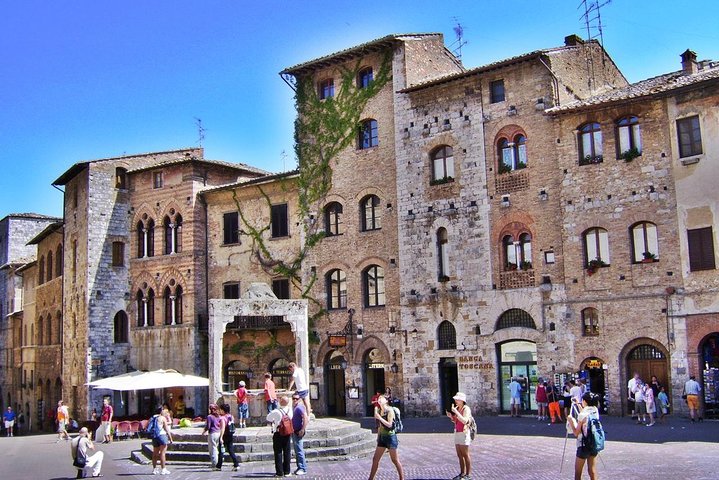
The two sit in the same part of Tuscany, south-west of Florence, and complement each other perfectly: Siena, the great Gothic city with its Campo and cathedral, and San Gimignano, the smaller hilltown famous for its medieval towers. Together they offer a rich taste of medieval Tuscany — a major city and a jewel-like hilltown — and the route between them runs through the beautiful Chianti countryside, so many tours add a winery visit or Tuscan lunch as well.
This Siena–San Gimignano (–Chianti) combination is a classic full-day tour from Florence, and for good reason: it packs two of Tuscany’s most beautiful medieval places, plus the countryside and often wine and food, into a single memorable day. Siena can also be visited on its own for a deeper exploration, but the combined tour is deservedly popular.
Who Are Siena Day Trips Best For?
Siena day trips appeal to a wide range of visitors.
History and architecture lovers — for the Gothic city, the cathedral and the medieval townscape.
Those wanting more than icons — visitors who want to explore and savour a beautiful city, not just tick off a sight.
The culturally curious — for the Palio, the contrade and Siena’s living traditions.
Couples — for the romance of the medieval streets and the Campo.
Those combining destinations — for the classic Siena–San Gimignano–Chianti day.
It suits those who appreciate a rich, full day exploring a beautiful and atmospheric city, rather than a quick photo stop. As Florence’s great rival and one of Italy’s loveliest medieval cities, Siena rewards the visit generously — one of the most satisfying day trips from Florence.
Practical Tips for Siena Day Trips
- Allow a full day — Siena rewards unhurried exploration.
- Start at the Piazza del Campo, the city’s magnificent heart.
- Don’t miss the striped Duomo, one of Italy’s finest cathedrals.
- Climb the Torre del Mangia for sweeping views.
- Learn about the Palio and contrade to understand the city.
- Consider combining with San Gimignano and Chianti for a classic day.
- Around 1–1.5 hours from Florence.
Are Siena Day Trips from Florence Worth It?
For anyone who loves history, architecture or beautiful cities, a Siena day trip from Florence is one of the most rewarding excursions available — a chance to experience Florence’s great rival and one of Italy’s finest medieval cities.
The appeal is depth and beauty. Siena is a perfectly preserved Gothic city, its glorious shell-shaped Campo among the greatest squares in Europe, its striped cathedral among the finest in Italy, its medieval streets and fiercely proud contrade a living link to the Middle Ages. And its famous Palio — the passionate bareback race around the Campo — reveals a city where ancient traditions still burn fiercely. Where some day trips offer a single sight, Siena offers a whole beautiful world to explore.
That richness means it rewards a full day, and those wanting the fullest experience should give it the time. But its position also makes it ideal to combine: the classic Siena–San Gimignano–Chianti tour packs two of Tuscany’s loveliest medieval places plus countryside, wine and food into one memorable day.
Whether explored deeply on its own or paired with San Gimignano and Chianti, a Siena day trip is well worth it — a journey into the heart of medieval Tuscany, and one of the most beautiful and satisfying days out from Florence.
Frequently Asked Questions
A Siena day trip is an excursion from Florence to the medieval city of Siena, Florence’s historic rival and one of the most beautiful and best-preserved medieval cities in Italy. Where Florence is the city of the Renaissance, Siena is the great Gothic city, with its glorious shell-shaped Piazza del Campo, its striped cathedral, and a townscape little changed in centuries. Around an hour to an hour and a half away, it rewards a full day of exploration.
The Piazza del Campo is Siena’s magnificent sloping, shell-shaped medieval square of warm brick, fanning out below the town hall and its soaring Torre del Mangia — one of the greatest public spaces in Italy. Twice each summer it hosts the Palio, a spectacular bareback horse race in which riders representing Siena’s historic contrade (city districts) compete amid centuries-old pageantry and fierce rivalry. The Palio is the beating heart of Sienese identity.
Beyond the Campo, Siena’s treasures include the spectacular Duomo, famous for its black-and-white striped marble, ornate facade and inlaid marble floor; the Torre del Mangia, which can be climbed for sweeping views; the Palazzo Pubblico town hall with its Civic Museum and celebrated frescoes; the contrade districts, each with its own emblem and identity; and the atmospheric warren of medieval brick streets, churches and squares.
The two sit in the same part of Tuscany south-west of Florence and complement each other perfectly — Siena the great Gothic city, San Gimignano the smaller hilltown of medieval towers — together offering a rich taste of medieval Tuscany. The route between them runs through the beautiful Chianti countryside, so many tours add a winery visit or Tuscan lunch, making the Siena–San Gimignano–Chianti combination a classic full-day tour from Florence.
Unlike compact Pisa, Siena rewards a full day of unhurried exploration — its shell-shaped Campo, striped cathedral, town hall, tower and medieval streets offer a whole beautiful city to savour rather than a single sight. Those wanting the fullest experience should give it the time, though its position also makes it ideal to combine with San Gimignano and Chianti on a busy full-day tour.
Siena is around an hour to an hour and a half from Florence, through the beautiful Tuscan countryside. The distance makes it a comfortable day trip, whether explored on its own for a deeper visit or combined with a nearby destination such as San Gimignano, with the route between them passing through the Chianti wine region.